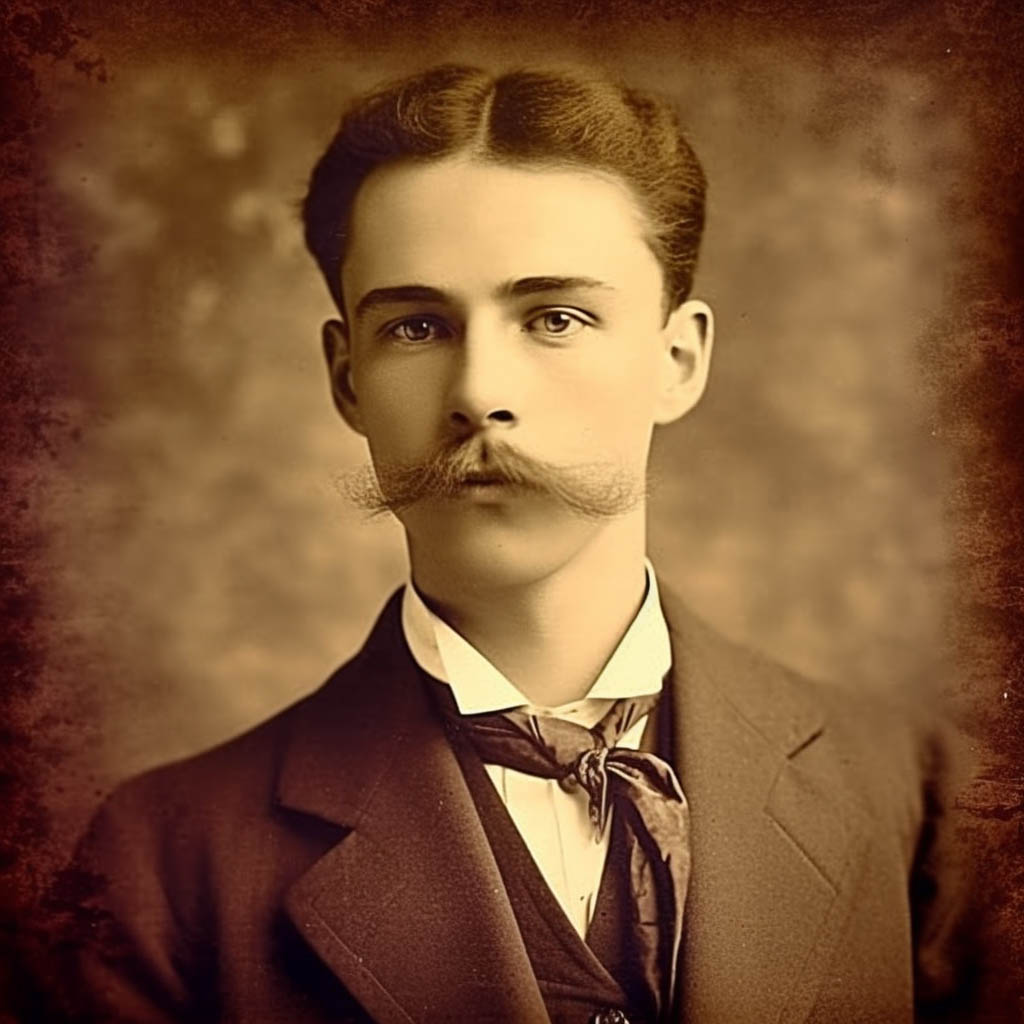
Petr Gruzinsky
/1837-1892/
Petr Gruzinsky, born on December 19, 1837, in Kursk to a modest noble family, became a prominent battle painter and genre artist, renowned in the second half of the 19th century. His art, saturated with realism and genuine emotion, left an indelible mark on the history of Russian painting.
Petr Gruzinsky received his first artistic education at home and then continued his studies at the Drawing School of the Society for the Encouragement of the Arts in St. Petersburg. In 1851, he entered the Imperial Academy of Arts, where he studied in the class of battle painting under the guidance of Professor Bogdan Willewalde. His talent was recognized with numerous medals and awards, including small and large silver medals, as well as a small gold medal for his work "Gypsy Camp."
In 1863, as a pensioner of the Academy, Gruzinsky traveled to Paris, where he also journeyed through Italy, Germany, and Austria. Although his works spanned various genres, fr om battle painting to scenes of urban life, they often drew attention to their battle narratives. He made a trip to the Caucasus to gather material for his famous painting "The Highlanders Leaving the Village as Russian Troops Approach," for which he was awarded the title of academician.
Upon returning to his homeland, Gruzinsky settled in St. Petersburg, wh ere he continued to work on commissions for the royal family and the imperial court. His works were exhibited at the Imperial Academy of Arts and the Society for the Encouragement of Arts. He also participated in the World Exhibition in Philadelphia in 1876, where his talent was recognized and appreciated.
Petr Gruzinsky's creativity was characterized by a variety of genres. He painted landscapes, and genre scenes, and even tried his hand at book illustration. His works, such as "Haymaking in Little Russia," "Shrovetide," "Troika," "Scene from Village Life," and "Country Walk," continue to captivate audiences with the artistry and skill of the artist to this day.