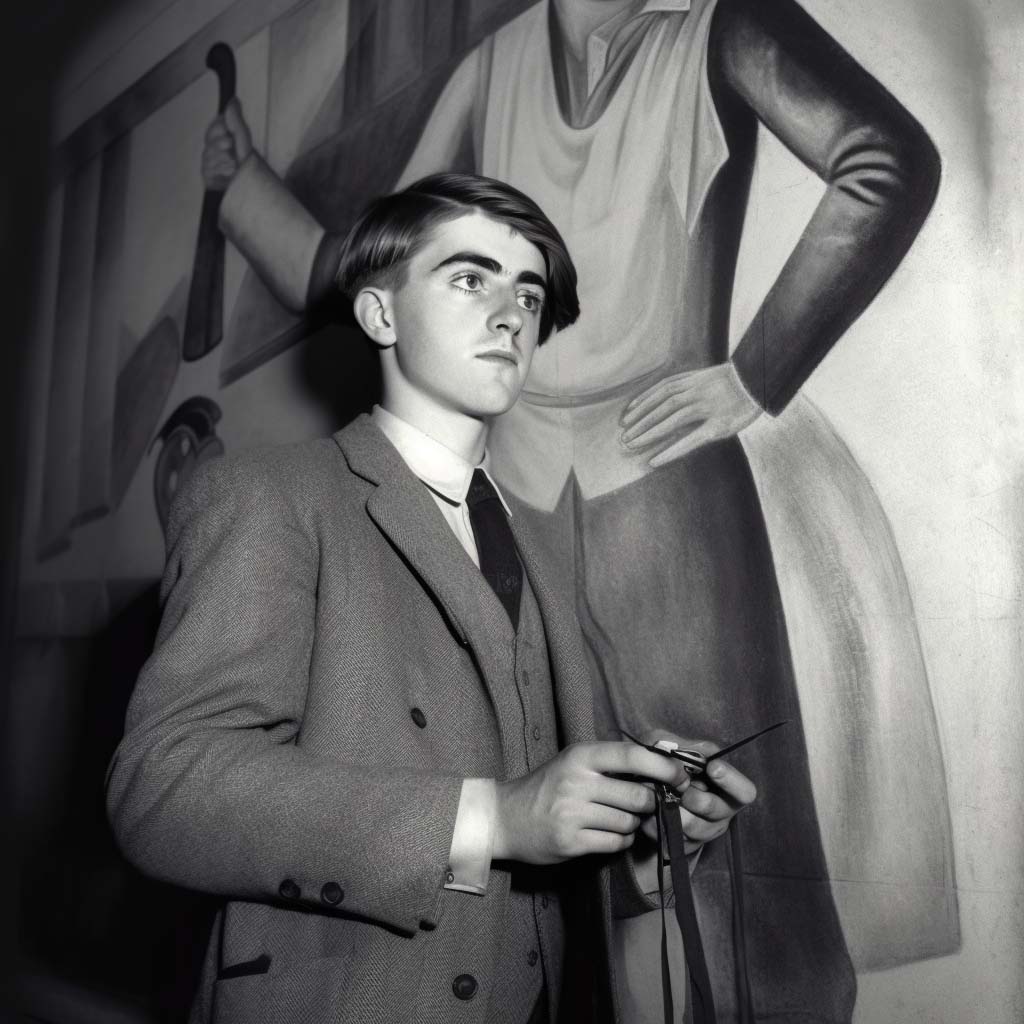
Victor Arnautoff
/1896-1979/
Victor Arnautoff, born in Mariupol, honed his artistic skills under local mentors. When the First World War erupted, he joined the Lithuanian Uhlan Regiment. His wartime valor earned him the Order of St. George. After the war, he settled briefly in Simbirsk before being mobilized into Kolchak's army, journeying across Siberia and the Far East.
In China, he discovered new cultures and met his future wife. Arnautoff sustained himself through art, particularly icon painting and crafting caskets. Seeking further education, he studied at the Lotus Studio.
In 1923, he became a cavalry instructor in Mukden. In 1925, Arnautoff embarked on a new chapter in the USA, studying at the California School of Fine Arts. In Mexico, he collaborated on awe-inspiring frescoes under Diego Rivera's mentorship.
Returning to the US in 1931, Arnautoff contributed to various projects, though not without occasional controversy. He actively supported the USSR during World War II and became an esteemed educator.
Arnautoff's artistic legacy found its canvas in exhibitions across cities like San Francisco, Trenton, and Stockton. In 1961, he returned to the USSR, marking a poignant return to his roots. In 1963, after retiring and the passing of his wife, he embraced Soviet citizenship. His notable works include the mosaic panel "The Conquest of Space" and a monument honoring the victims of fascism, both in Mariupol. Arnautoff's journey was one of resilience, creativity, and unwavering commitment to his craft, leaving an indelible mark on the annals of art history.